



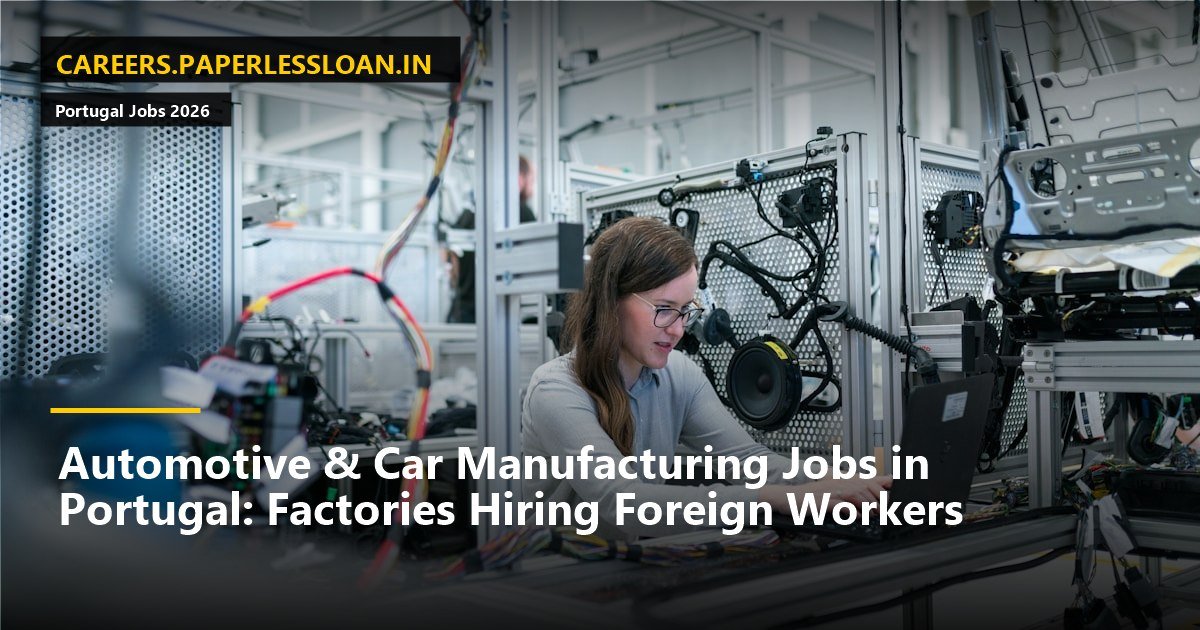
Automotive and Car Manufacturing Jobs in Portugal: Factories Hiring Foreign Workers
Portugal has quietly become one of Europe’s more attractive manufacturing destinations over the past decade. Competitive labor costs, a strategic Atlantic location, and a growing network of international automotive suppliers have brought significant foreign investment – and with it, thousands of factory and engineering roles. For those searching for jobs in Portugal for foreigners, the automotive sector offers one of the most accessible entry points into European employment.
Why Portugal’s Automotive Sector Is Growing in 2026
Portugal may not be the first country that comes to mind for car manufacturing, but the output figures tell a clear story. The country exports over 200,000 vehicles annually, backed by a cluster of assembly plants and component suppliers spread across the Setubal, Porto, and Braga regions. Government incentives for foreign direct investment have created reliable hiring pipelines, and demand for production workers continues to outpace local supply. For those exploring Portugal work visa jobs, the automotive industry offers structured pathways that many other sectors simply cannot match.
Key Employers Hiring Foreign Workers
Several large manufacturers and their supplier networks account for most available openings.
Autoeuropa
Located near Palmela, south of Lisbon, Autoeuropa is Volkswagen’s only car assembly plant on the Iberian Peninsula. It produces models including the T-Roc and Sharan. Hiring rounds open several times per year for production operators, quality inspectors, and logistics staff, and the scale of the plant means consistent demand throughout the year.
Faurecia and Yazaki
These global tier-one suppliers have established operations across Portugal. Faurecia focuses on seating and interior systems, while Yazaki produces wiring harnesses. Both recruit regularly and have experience navigating the Portugal employment visa process for applicants from outside the EU.
Bosch Portugal
Bosch operates facilities in Braga and Aveiro covering automotive electronics and industrial technology. Roles span production workers, maintenance technicians, and engineers. Internal mobility programs sometimes include relocation support, making Bosch a practical option for expat jobs Portugal applicants arriving from outside Europe.
Types of Roles Available
Production and Assembly Operators
These are the most common openings in the sector. Workers assemble parts on the line, operate machinery, perform basic quality checks, and adhere to safety procedures. Physical fitness and attention to detail matter more than formal qualifications for many of these positions.
Quality Control Technicians
Factories need inspectors who can identify defects before vehicles or components leave the plant. These roles typically require some technical training and familiarity with measurement tools, gauges, and inspection documentation.
Logistics and Warehouse Staff
Just-in-time manufacturing depends on tight supply chains. Forklift operators, inventory coordinators, and inbound logistics handlers are in consistent demand at large automotive sites across the country.
Engineers and Technical Specialists
For applicants with engineering backgrounds, Portugal offers process engineering, industrial maintenance, and product development roles. Portugal jobs for Indians with technical degrees have increased steadily as manufacturers seek multilingual talent to support international supply chains.
Navigating the Portugal Work Visa
Foreign nationals from outside the Schengen Area require a Portugal employment visa before starting work. The process begins with a signed employment contract or a formal job offer from a Portuguese employer. Once in-country, workers convert this to a residence permit through AIMA, the Agency for Integration, Migration and Asylum.
Key points:
- The employer typically initiates the work authorization process on the applicant’s behalf
- Processing times range from four to twelve weeks depending on nationality and consulate
- Companies offering jobs in Portugal with visa sponsorship often handle significant portions of the required paperwork
- Indian, Brazilian, and Bangladeshi applicants benefit from established legal pathways supported by bilateral agreements with Portugal
Work in Portugal 2026 has become more realistic following immigration reforms that streamlined labor migration from third countries and reduced administrative backlogs at Portuguese consulates worldwide.
Wages and Working Conditions
Portugal’s minimum wage in 2026 stands at 870 euros per month. Automotive factory roles typically pay above this level. Production operators at established plants earn between 1,000 and 1,400 euros gross monthly, while engineers and technicians can expect 1,800 to 2,500 euros depending on experience. Night shifts and weekend work attract pay premiums of 25 to 50 percent above base rates.
Most major employers offer meal subsidies, transport allowances, and group health insurance through collective bargaining agreements. Occupational safety standards at large multinationals align closely with EU regulations and are regularly audited.
Where the Factories Are Located
Automotive manufacturing in Portugal is concentrated in a few key areas:
- Setubal and Palmela – home to Autoeuropa and a dense cluster of tier-one supplier parks
- Braga and the Minho region – strong in electronics and wiring harness production
- Aveiro and the Centro region – a mix of industrial component suppliers and Bosch facilities
- Greater Porto – an expanding industrial zone attracting growing volumes of new investment
These are not Lisbon jobs for foreigners in the traditional urban sense, but housing and daily living costs are far lower than in the capital. Smaller factory towns often have established communities of foreign workers that help ease the transition for new arrivals.
How to Apply
Major employers advertise through their corporate careers portals and national job boards such as Emprego.pt and Net-Empregos. International platforms like LinkedIn and Indeed Portugal also carry relevant listings for expat jobs Portugal searches. For smaller suppliers, contacting an industrial staffing agency is often the most direct route, as many factories outsource early-stage recruitment.
Practical steps:
1. Use a clean European-format CV focused on measurable work experience rather than visual design
2. State your current visa status and willingness to relocate clearly in your cover note
3. Contact industrial staffing agencies that specialize in manufacturing placements
4. For flagship plants like Autoeuropa, reaching the HR department directly can shorten response times
Language matters. Portuguese is strongly recommended for floor-level roles. Engineering and management positions at multinationals often operate in English, but basic Portuguese ability is noticed positively and helps considerably with life outside work.
Frequently Asked Questions
What automotive jobs are available in Portugal for foreign workers?
Production operators, quality inspectors, logistics coordinators, forklift operators, and engineers are all roles that foreign nationals regularly fill. Autoeuropa, Bosch, Yazaki, and Faurecia are among the most active and internationally recognized employers in the sector.
Do Portuguese automotive companies offer visa sponsorship?
Yes. Several large manufacturers and their staffing partners provide jobs in Portugal with visa sponsorship and typically assist applicants with the employment contract documentation required by the Portuguese consulate in the worker’s home country.
Are Portugal jobs for Indians realistic in the automotive sector?
Yes. Indian nationals with technical qualifications or prior production experience have secured roles in Portuguese factories, particularly in quality control and engineering functions. The visa process is well-established for Indian applicants through the Portuguese consulate network.
What is the average salary for a factory worker in Portugal?
Production operators generally earn between 1,000 and 1,400 euros gross per month. Engineers and senior technicians typically earn 1,800 to 2,500 euros or more, depending on experience level and the specific employer.
Is Portuguese language required for factory jobs?
For most floor-level production and logistics roles, basic Portuguese is strongly recommended. Engineering positions at multinationals often operate in English. Any Portuguese language preparation before arrival will be appreciated by employers and significantly ease daily life.
Conclusion
Portugal’s automotive manufacturing sector offers a credible and growing pathway for foreign workers seeking to build careers in European industry. From Autoeuropa near Palmela to Bosch facilities in Braga and supplier networks across the Centro region, the hiring volume is real and the legal frameworks for labor migration are clearer than in many competing destinations. Whether you are evaluating jobs in Portugal for foreigners across multiple sectors or targeting car manufacturing specifically, practical skills and patience with the visa process will serve you well. With sustained investment flowing into the sector through 2026 and beyond, the window for qualified applicants remains open.
Helpful Links
- [Working in Portugal – Official Information](https://www.portugal.gov.pt/en/gc24/area-de-atuacao/trabalho)
- [IEFP – Employment and Vocational Training](https://www.iefp.pt/en)
- [Visa Portal – Portuguese Immigration](https://vistos.mne.gov.pt/en/)


