



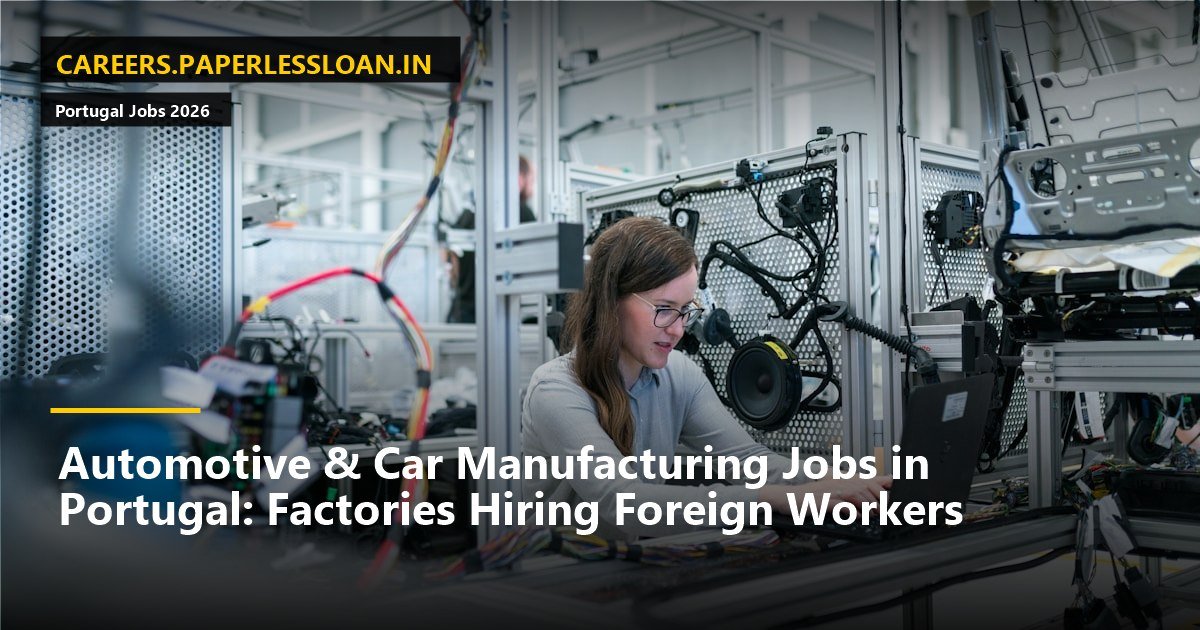
Automotive and Car Manufacturing Jobs in Portugal: Factories Hiring Foreign Workers
Portugal has quietly become one of Europe’s more attractive destinations for foreign workers seeking careers in manufacturing. The automotive sector has seen consistent investment and expansion over the past decade, and demand for skilled factory workers continues to climb. For job seekers from India, South Asia, Latin America, and other parts of the world, the combination of a manageable cost of living, EU market access, and active industrial hiring makes Portugal worth serious attention.
This guide covers what you need to know about finding automotive and car manufacturing jobs in Portugal as a foreigner in 2026 – from which factories are actively hiring to how the Portugal employment visa process works in practice.
Why Portugal Is Attracting Foreign Workers in Automotive Manufacturing
Portugal’s automotive sector is not new. The country has a long industrial tradition, and today it hosts several international vehicle manufacturers and component suppliers. Companies here benefit from EU membership, competitive operating costs, and strong logistics networks connecting to the rest of Europe.
Post-pandemic supply chain shifts pushed many European manufacturers to expand or diversify their production bases. This directly increased demand for foreign labor in areas like assembly, quality control, welding, and logistics – exactly where jobs in Portugal for foreigners are now growing fastest. Employers familiar with Portugal work visa jobs are actively using recruitment channels that reach well beyond European borders.
Major Automotive Factories and Employers in Portugal
Several companies form the backbone of Portugal’s car manufacturing sector, and each regularly hires workers across multiple roles.
Autoeuropa – Volkswagen Group Plant
The Autoeuropa plant in Palmela, near Setubal, is one of Portugal’s most significant automotive facilities. It produces Volkswagen models and employs thousands across assembly lines, quality inspection, and logistics operations. The plant works with labor agencies during its hiring cycles and has direct experience recruiting workers from abroad.
Continental and Bosch Components
Beyond full vehicle assembly, Portugal hosts many tier-one automotive suppliers. Continental has a substantial presence in Lousado, while Bosch operates manufacturing facilities in Braga. These companies produce electronics, braking systems, and mechanical components. Workers with technical training in electronics or industrial mechanics are particularly valued at both sites.
Toyota Caetano Portugal
Toyota’s local subsidiary manufactures light commercial vehicles in Ovar. This facility has a history of hiring skilled foreign workers for assembly, paint shop, and quality control roles, making it a worthwhile direct target for overseas applicants.
Types of Jobs Available for Foreign Workers
Roles in Portuguese automotive factories cover a wider range than most applicants initially expect.
Production and Assembly Workers
These positions involve working directly on the manufacturing line – fitting parts, operating machinery, and supporting automated systems. Advanced qualifications are not typically required, but physical stamina and consistent attention to detail are essential day-to-day.
Quality Control Technicians
Quality roles require inspecting finished products or in-process components against strict manufacturing standards. Some experience with ISO or IATF quality frameworks adds real weight to applications in this area.
Welding and Fabrication
Skilled welders remain in steady demand across Portuguese industry. MIG, TIG, and spot welding certifications significantly improve your chances of landing a role with visa sponsorship in 2026.
Logistics and Warehouse Operations
Factories depend on smooth movement of parts and finished goods. Forklift operators, warehouse staff, and inventory controllers are regularly sought, especially during production increases and new model launch periods.
Understanding the Portugal Employment Visa for Factory Workers
Workers from outside the EU need a Portugal employment visa before working legally in the country. The process follows a fairly clear sequence.
First, secure a confirmed job offer from a Portuguese employer. That employer registers the offer with IEFP, Portugal’s public employment and vocational training institute. Once approved, you apply for a work visa at the Portuguese consulate in your home country. After arriving in Portugal, you convert the entry visa into a residence permit through AIMA, the immigration authority.
Processing typically takes two to four months, depending on your nationality and the workload at your consulate. Larger factories have navigated this process many times and can often provide administrative guidance to help foreign recruits move through the steps efficiently.
Jobs in Portugal With Visa Sponsorship – What to Expect
Not every company directly sponsors visas in the formal sense. In most cases, support means the employer registers your job offer with the relevant authorities and supplies the required documentation. Visa application fees are generally your responsibility.
However, larger industrial employers and international staffing agencies who actively recruit abroad sometimes offer relocation assistance, initial housing support, and paperwork guidance as part of the employment package. This is especially common for skilled tradespeople in welding, CNC operation, or mechatronics – roles where expat jobs Portugal listings often carry the most complete benefit packages.
How Indian and South Asian Workers Are Finding Opportunities
Portugal jobs for Indians have become a genuine topic of discussion in work-abroad communities over the past several years. Demand for factory and logistics workers has pushed Portuguese employers to look well beyond EU borders. India, Nepal, Bangladesh, and Pakistan have each become meaningful sources of industrial labor for the sector.
Workers from these regions typically apply through licensed recruitment agents in their home countries or via platforms like LinkedIn and EURES, the European job mobility portal. The critical step is verifying that any agent you work with is properly licensed and does not collect illegal upfront fees before placing you.
Living as an Expat Worker in Portugal
Life for expat factory workers in Portugal is manageable on a manufacturing salary, especially compared to destinations like Germany or the Netherlands. Cities such as Setubal, Braga, and Ovar – where most automotive activity is concentrated – offer significantly lower rents than Lisbon jobs for foreigners typically require to sustain a reasonable standard of living.
Basic expenses including shared accommodation, groceries, and public transport are affordable on a factory wage. Portuguese society is broadly welcoming toward immigrants, partly shaped by the country’s own long emigration history. That shared experience tends to produce a practical, open attitude toward foreign workers arriving to contribute to the local economy.
Tips for Applying to Automotive Jobs in Portugal From Abroad
A clear approach makes the real difference when applying from overseas.
Use a European-style CV – one to two pages, focused on relevant skills and measurable experience. Prepare a Portuguese-language cover letter if you can, or at least translate the key sections. Use EURES and the IEFP job portal for official vacancies. Apply directly to major employers through their official career pages rather than third-party aggregators. Be upfront about your visa status from the first contact – employers need to know you require a Portugal employment visa before committing administrative resources to your application.
Frequently Asked Questions
What kinds of automotive jobs are available in Portugal for foreigners?
Roles include assembly workers, welders, quality inspectors, CNC operators, logistics staff, and maintenance technicians. Both skilled and semi-skilled positions exist across the sector, with demand spread across multiple regions of the country.
Do Portuguese factories provide visa sponsorship?
Larger employers effectively support the visa process by registering your job offer with IEFP and supplying the necessary documentation. The degree of direct sponsorship and additional support varies by employer and the role being filled.
How long does the Portugal employment visa take to process?
Processing usually takes two to four months, depending on your nationality and which consulate handles your application. Applying early after receiving a job offer is strongly recommended.
Is Portugal a realistic destination for Indian workers in manufacturing in 2026?
Yes. Work in Portugal 2026 is genuinely accessible for non-EU workers with relevant skills. Manufacturing and logistics roles have expanded considerably, and Portugal jobs for Indians have grown in both availability and community support networks over recent years.
Can I bring my family once I have a Portuguese work permit?
Once you hold a valid residence permit based on employment, you can apply for family reunification to bring your spouse and dependent children to Portugal under established immigration rules.
Conclusion
Automotive and car manufacturing jobs in Portugal represent a real and growing opportunity for foreign workers willing to navigate the visa process. With employers like Autoeuropa, Continental, Bosch, and Toyota Caetano operating facilities across the country, work in Portugal 2026 is within reach for those with skills in welding, assembly, quality control, or logistics.
The practical path forward is finding an employer willing to support your Portugal employment visa documentation, applying through official channels, and preparing your paperwork thoroughly from the start. Portugal’s welcoming immigration framework and rising industrial demand make it one of the more accessible EU destinations for expat jobs in manufacturing. Start your search through EURES and employer career portals early – a factory career in Portugal may be closer than it appears.
Helpful Links
- [Working in Portugal – Official Information](https://www.portugal.gov.pt/en/gc24/area-de-atuacao/trabalho)
- [IEFP – Employment and Vocational Training](https://www.iefp.pt/en)
- [Visa Portal – Portuguese Immigration](https://vistos.mne.gov.pt/en/)


