



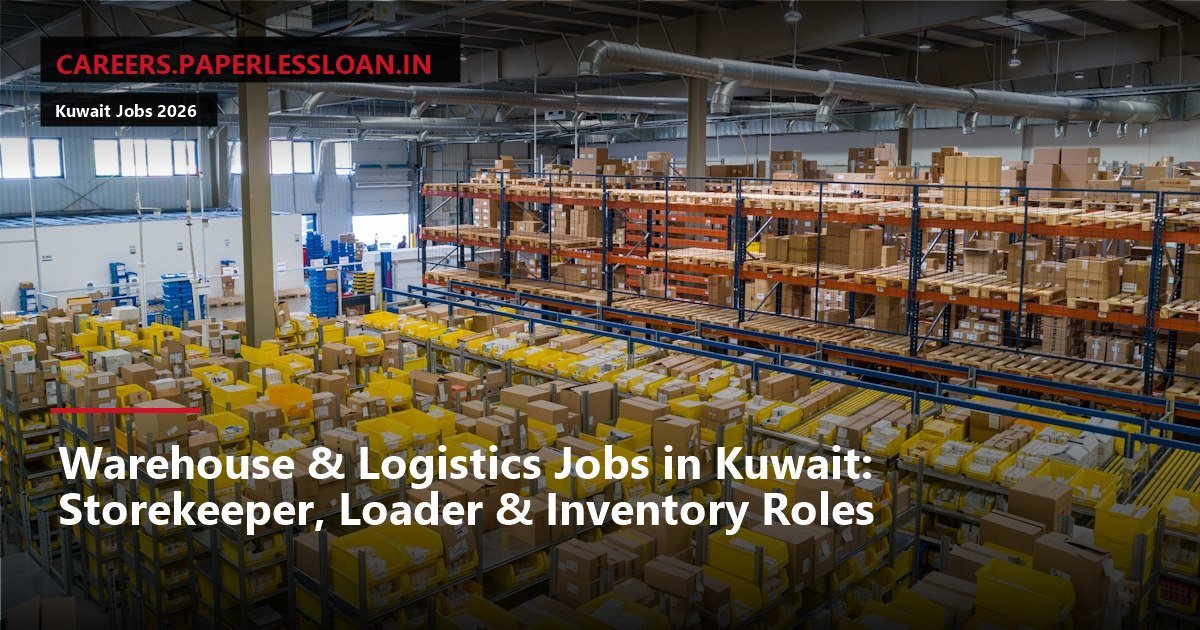
Warehouse and Logistics Jobs in Kuwait: Storekeeper, Loader and Inventory Roles in 2026
Kuwait’s economy continues to expand, driven by oil revenues, large-scale construction projects, and a fast-growing retail sector. Behind all of this activity sits a workforce of logistics and warehouse professionals who keep goods moving every single day. From storekepers managing parts inventory at oil facilities to loaders working across Kuwait City’s distribution hubs, demand for both skilled and semi-skilled warehouse workers remains strong throughout 2026.
For anyone exploring Kuwait jobs for foreigners, the warehouse and logistics sector offers a realistic and well-established entry point. Many employers in this space provide jobs in Kuwait with visa sponsorship, making the transition financially manageable for workers from South Asia, Southeast Asia, and Africa. This article covers the most common roles, realistic salary ranges, the Kuwait employment visa process, and practical advice for securing a legitimate placement.
Why Kuwait Relies on Foreign Warehouse Workers
Kuwait imports the vast majority of what it consumes – food, electronics, building materials, and consumer goods – all of which must be received, stored, tracked, and distributed efficiently. The retail sector has expanded considerably, with large hypermarkets and mall complexes requiring dedicated logistics teams operating around the clock.
Oil and gas facilities, construction contractors, government agencies, and hospitals all maintain sizable warehouses and depend on consistent staffing. This broad demand means Kuwait visa sponsorship jobs in the logistics space appear across multiple industries, not just retail or shipping. Workers who want to work in Kuwait 2026 will find a reliable pipeline of openings year-round.
Common Warehouse and Logistics Roles in Kuwait
Storekeeper
A storekeeper receives incoming goods, updates inventory records, organizes storage areas, and issues materials when requested by other departments. This role requires attention to detail and familiarity with inventory software or manual ledger systems. Oil sector companies and large contractors typically hire storekepers with at least two years of relevant experience.
Loader and Unloader
Loaders physically handle goods – lifting, stacking, and moving items within a warehouse or between vehicles and storage areas. The work is physically demanding and generally requires no formal education beyond basic literacy. Loader roles are among the most accessible Kuwait jobs for foreigners who do not hold advanced qualifications.
Inventory Controller
An inventory controller sits above the storekeeper in most organizations. This person audits stock levels, investigates discrepancies, generates reports, and coordinates with procurement teams. Proficiency in systems such as SAP, Oracle, or Excel is commonly required. Expat jobs Kuwait in inventory control tend to offer better salaries than entry-level warehouse positions.
Forklift Operator
Certified forklift operators are in consistent demand at ports, large warehouses, and manufacturing facilities. A valid license from your home country is typically accepted, though some employers request local revalidation before you begin work.
Salary Expectations for Warehouse Roles
Salaries vary depending on the role, the employer, and the sector. The following are approximate monthly figures in Kuwaiti Dinars (KWD):
- Loader: 70 to 120 KWD
- Storekeeper: 120 to 200 KWD
- Forklift Operator: 150 to 250 KWD
- Inventory Controller: 200 to 350 KWD
- Logistics Supervisor: 350 to 600 KWD
These amounts exclude accommodation and transport allowances, which many employers include in the overall package. Workers considering work in Kuwait 2026 should factor in these non-cash benefits when comparing offers, as they can significantly raise the real value of a contract.
Understanding the Kuwait Employment Visa
Most warehouse workers enter Kuwait under the kafala system, where a sponsoring employer is legally responsible for the worker’s stay. For anyone searching for free visa jobs Kuwait, it is worth understanding that all legal workers still require employer sponsorship – this is the standard Kuwait employment visa pathway and not an exception to it.
The process generally works as follows: an employer selects a candidate, submits a work permit application through the Public Authority for Manpower, and arranges the visa through the Ministry of Interior. Once approved, the worker travels to Kuwait and completes residency registration on arrival.
The Kuwait work permit is tied to the sponsoring employer. Changing jobs requires a formal transfer approved by the relevant authority. Workers should read their contracts in full before signing and ensure the terms match what was verbally agreed.
Where to Find Genuine Kuwait Visa Sponsorship Jobs
Several reliable channels exist for finding legitimate jobs in Kuwait with visa sponsorship:
- Licensed recruitment agencies in your home country that specialize in Gulf placements
- Online job portals including Bayt, GulfTalent, and Naukrigulf
- Direct applications to large logistics employers such as Agility Logistics and major retail chains
- Government-to-government labor agreements, which are common for workers from the Philippines, India, Nepal, and Bangladesh
Always verify that any agency holds a current license before making any payments. Legitimate placements for expat jobs Kuwait do not require large upfront fees from the worker. If an agent requests a significant sum before issuing a signed job offer, treat this as a serious warning sign.
Documents Required for the Application Process
Most employers hiring for warehouse roles expect the following:
- A valid passport with at least 18 months remaining before expiry
- Educational certificates attested appropriately for your destination
- Experience letters from previous employers
- A medical fitness certificate issued by an approved clinic
- A police clearance certificate from your country of residence
Some employers also conduct a skills assessment or online interview before issuing a job offer letter. This letter is the first document required to begin the Kuwait employment visa application, so obtaining it is a key milestone in the process.
Working Conditions and Labor Rights
Conditions in Kuwait have improved following a series of labor law reforms. Workers are entitled to one day of rest per week, paid annual leave, overtime compensation, and an end-of-service gratuity after completing at least one year with the same employer.
Kuwait’s summers are intense, and outdoor labor is regulated during peak midday heat under government rules. Established warehouses and distribution centers are air-conditioned, making indoor roles more comfortable. Accommodation is commonly arranged by the employer for entry-level positions, typically in shared labor housing.
The Public Authority for Manpower manages worker registration and handles complaints. Knowing your rights under the Kuwait work permit system before you travel helps you recognize when an employer is meeting their obligations and when they are not.
Tips for Securing a Legitimate Placement
A few practical steps improve your chances of landing a verified role:
- Have all certificates attested and translated before applying
- Be specific and honest about your experience level during interviews
- Research any company before you accept an offer letter
- Avoid agents who demand payment before providing verifiable job details
- Maintain organized digital copies of every document throughout the process
Workers who take a professional and methodical approach tend to secure better placements and encounter fewer difficulties once they arrive.
Frequently Asked Questions
Is Kuwait a practical destination for warehouse workers in 2026?
Yes. Kuwait offers regionally competitive salaries, a stable employment environment, and established legal protections for migrant workers. Many roles come with accommodation and transport included.
Do I need prior experience to find a loader job in Kuwait?
Loader and general laborer roles frequently require no formal experience beyond a basic fitness standard. Storekeeper and inventory controller positions typically expect one to two years of documented work history.
What does the term free visa mean for Kuwait jobs?
The phrase is used loosely in some recruitment advertising. In practice, every legal worker in Kuwait requires employer sponsorship under the kafala system. There is no standalone work visa issued independently of an employer.
How long does the Kuwait employment visa take to process?
Processing times typically range from four to eight weeks from the date an employer submits the work permit application to the date the worker can travel.
Can a warehouse worker change employers in Kuwait?
Yes, but this requires either formal approval from the current sponsor or completion of the contract term. The Kuwait work permit transfer must be processed through the Public Authority for Manpower.
Conclusion
Warehouse and logistics roles in Kuwait offer a practical path for workers at multiple experience levels. Whether you are pursuing storekeeper positions in the energy sector, loader roles at a distribution center, or inventory control in a large retail facility, genuine demand remains consistent throughout 2026. Workers who seek Kuwait jobs for foreigners through verified channels, prepare their documentation properly, and understand the Kuwait employment visa process from the start are far better positioned to build stable careers in the Gulf. Do your research, know your rights, and approach the opportunity with a clear and realistic view of what the work involves.
Helpful Links
- [Kuwait Government Online](https://e.gov.kw/sites/kgoenglish/Pages/HomePage.aspx)
- [Public Authority for Manpower](https://www.manpower.gov.kw/)
- [Kuwait Labour Law overview](https://www.manpower.gov.kw/En/Pages/default.aspx)


