



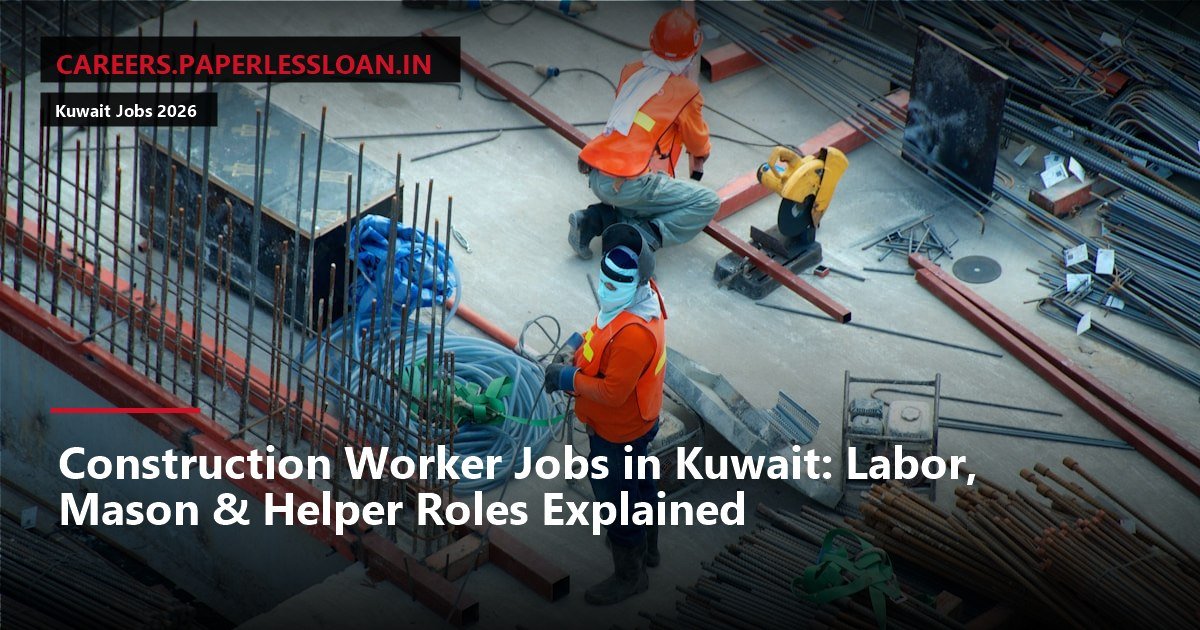
Construction Worker Jobs in Kuwait: Labor, Mason and Helper Roles Explained
Kuwait’s construction sector is one of the most active in the Gulf, and it shows no sign of slowing down. Government investment in infrastructure projects, alongside steady private development in residential and commercial real estate, has created consistent demand for both skilled tradespeople and general laborers. For foreign nationals considering expat jobs in Kuwait, construction offers one of the most practical and well-established entry points into Gulf employment.
This guide explains the main roles available, what workers can realistically expect to earn, and how the Kuwait employment visa and sponsorship process works in this sector.
Why Kuwait Relies Heavily on Foreign Construction Workers
Kuwait’s national workforce is simply too small to meet the scale of its development ambitions. Projects tied to Vision 2035 and sustained oil infrastructure upgrades require tens of thousands of workers spread across all skill levels. To fill that gap, Kuwaiti employers recruit heavily from South Asia, Southeast Asia, and parts of sub-Saharan Africa.
For anyone planning to work in Kuwait 2026, construction stands out as one of the most visa-active industries. Employers in this space regularly offer Kuwait visa sponsorship jobs bundled with accommodation, meals, and airfare, making it possible for workers to relocate with minimal upfront expense.
Types of Construction Roles Available
General Laborer
General laborers handle material transport, site cleanup, mixing tasks, and support duties for skilled workers. No formal certification is required. These positions represent the most direct route to a Kuwait work permit for workers who do not yet hold a recognized trade qualification.
Mason and Bricklayer
Masons who can lay block, brick, or concrete are consistently sought as Kuwait expands its building stock. Employers often run short practical assessments before confirming placement. Skilled masons earn more and tend to advance faster than workers in non-trade roles.
Carpenter and Steel Fixer
Formwork carpenters and steel fixers are needed on most large-scale construction projects. Workers who can build and strip concrete shuttering or tie and position reinforcement steel are well-positioned in the Kuwait jobs market. Experience with both timber and steel form systems is a clear advantage.
Helper and Site Assistant
Helper roles support skilled tradespeople by passing materials, maintaining work areas, and carrying out site errands. These positions suit applicants with little or no prior construction experience and serve as a natural starting point for those pursuing Kuwait jobs for foreigners for the first time.
Salary and Benefits for Construction Workers
Pay depends on skill level, employer size, and the complexity of the project. General helpers typically earn between KWD 60 and KWD 100 per month. Skilled masons and carpenters can earn KWD 130 to KWD 200 or above. Most contracts include shared accommodation and meals, which reduces day-to-day living costs substantially.
Employers offering free visa jobs in Kuwait generally absorb the full cost of visa processing, medical checks, and airport transfers. Overtime is common on active project sites, and many workers earn well above their base rate during peak building periods.
How Visa Sponsorship Works in Kuwait Construction
Kuwait operates under the kafala sponsorship system, which ties a foreign worker’s legal residency directly to their employer. When a construction firm recruits from abroad, it assumes the role of sponsor – managing the Kuwait employment visa application, work permit registration, and pre-departure medical clearances on the worker’s behalf. This simplifies the process considerably for incoming workers who would otherwise need to navigate immigration procedures independently.
Workers should read contracts carefully before signing. Areas worth reviewing include contract length, notice periods, overtime entitlements, accommodation standards, and repatriation terms. A reputable employer will never ask workers to personally cover the cost of their visa or work permit.
How to Find Construction Jobs in Kuwait with Visa Sponsorship
Most recruitment in this sector is channeled through licensed manpower agencies based in countries like India, Pakistan, Nepal, the Philippines, and Bangladesh. These agencies work directly with Kuwaiti construction firms and manage the full process – from skills verification and document preparation to flight coordination.
Only engage agencies registered with your home country’s overseas employment authority. Legitimate Kuwait visa sponsorship jobs will never charge workers for visa fees, work permits, or employer introductions. Agencies demanding large upfront payments should be treated as a warning sign.
Gulf-focused job boards, diaspora networks, and community referrals are also worth exploring and can surface genuine opportunities that do not appear through formal agency channels.
What to Expect When You Arrive in Kuwait
New arrivals typically undergo a medical fitness check and biometric registration as part of the residency permit process. Workers are then assigned to employer-managed accommodation near the construction site.
Living conditions vary between companies. Researching a firm’s reputation through worker forums or community contacts before accepting an offer is time well spent. A structured induction process and a clear start date are both signs of an organized employer.
Working Conditions and Climate Challenges
Kuwait’s summer heat is a serious consideration. Temperatures from June through September regularly reach 45 to 50 degrees Celsius. Kuwait’s labour law prohibits outdoor construction work between 11am and 4pm during this period, shifting schedules to early mornings and evenings.
Workers should arrive physically prepared, stay consistently hydrated on site, and follow all safety protocols. Employers who take compliance seriously enforce mandatory shade breaks and issue heat-protection equipment to site workers.
Workers Rights Under Kuwait Labour Law
Foreign construction workers in Kuwait are covered by national labour legislation. Core entitlements include annual leave, an end-of-service gratuity payment, and regulated overtime rates. Employers are legally prohibited from confiscating workers’ passports, though this is a right workers may sometimes need to actively assert.
Anyone facing a contract dispute or mistreatment has the right to file a complaint with the Ministry of Social Affairs and Labour. The Public Authority for Manpower also provides dedicated support services for workers in difficulty. Understanding these protections before you travel is an essential part of preparing to work in Kuwait 2026.
Frequently Asked Questions
What documents are typically needed to apply for a construction job in Kuwait?
Most employers require a valid passport, passport-size photographs, trade or educational certificates, a medical fitness certificate, and a police clearance from your home country. Your recruitment agency will give you a specific checklist based on the employer’s requirements.
Are there free visa jobs in Kuwait available for construction workers?
Yes. Many Kuwaiti construction companies cover the full cost of visa and work permit processing. This is standard practice for large-scale labor recruitment in the sector. If a recruiter asks you to pay for your own visa, treat it as a red flag.
Can construction workers change employers once they are in Kuwait?
Changing employers requires either sponsor consent or approval from the Ministry of Social Affairs and Labour. Recent reforms have made the process somewhat more accessible, but it remains structured. Workers should clarify job mobility terms before signing a contract.
How long do construction work contracts usually last?
Standard contracts run for two years with an option to renew. Shorter contracts of six to twelve months exist for project-specific roles, particularly in specialized finishing or fit-out trades nearing site completion.
Is family sponsorship possible for construction workers in Kuwait?
Workers on lower wage grades in construction typically do not meet the salary threshold required to sponsor dependents. Higher-paid supervisors and skilled tradespeople may qualify after a period of service. Confirm the current threshold with the Public Authority for Manpower before making family relocation plans.
Conclusion
Construction worker jobs in Kuwait offer a well-established and accessible route into Gulf employment for laborers, masons, helpers, and skilled tradespeople at every experience level. With demand driven by long-term national development programs, jobs in Kuwait with visa sponsorship in this sector remain consistently available through legitimate recruitment networks.
Arriving prepared – with verified documents, a clear understanding of the kafala system, and knowledge of your legal rights as a worker – puts you in the strongest position to make the most of what Kuwait has to offer. For workers who approach the opportunity seriously and through the right channels, work in Kuwait 2026 can represent stable income, practical skills growth, and a meaningful improvement in long-term financial standing.
Helpful Links
- [Kuwait Government Online](https://e.gov.kw/sites/kgoenglish/Pages/HomePage.aspx)
- [Public Authority for Manpower](https://www.manpower.gov.kw/)
- [Kuwait Labour Law Overview](https://www.manpower.gov.kw/En/Pages/default.aspx)


