



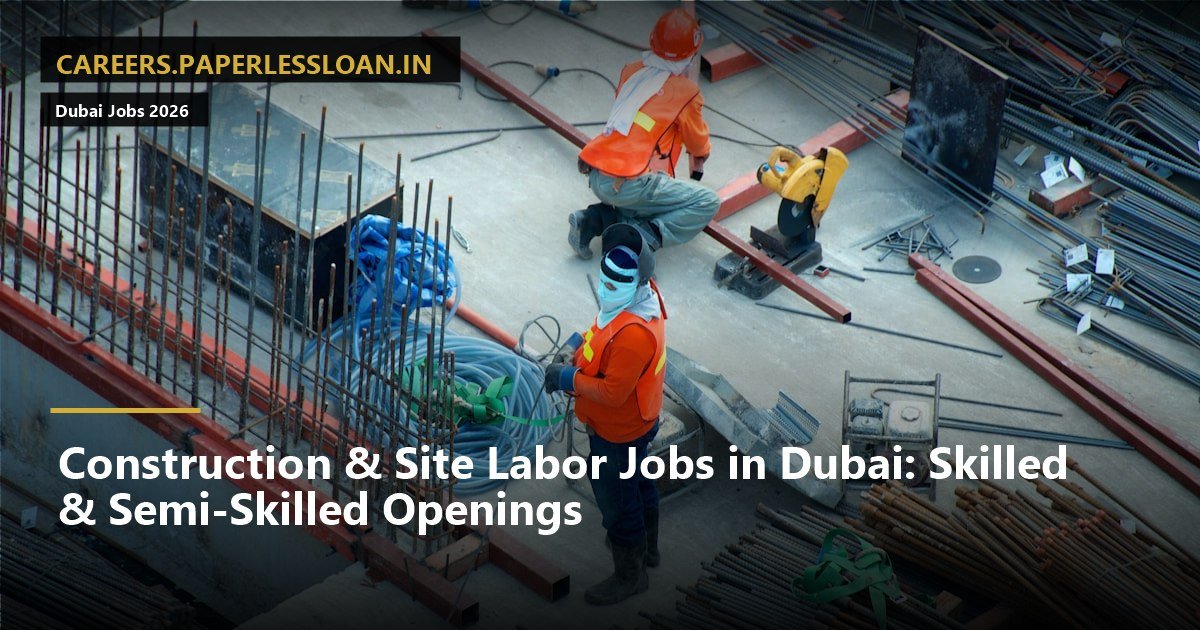
Construction & Site Labor Jobs in Dubai: Skilled and Semi-Skilled Openings
Dubai never stops building. New residential towers, expanded highways, metro line extensions, and tourism mega-projects keep the emirate’s construction sector running at full pace year after year. In 2026, this momentum shows no signs of slowing, which means steady demand for both skilled tradespeople and semi-skilled site workers from across the globe. Many of these roles come with jobs in Dubai with visa sponsorship, tax-free salary Dubai packages, and employer-provided benefits that make the move worthwhile for workers at every experience level. This article covers what roles are available, what pay and perks to expect, and how to navigate the process of securing work in Dubai 2026 through proper channels.
Why Dubai’s Construction Sector Keeps Growing
Dubai’s Urban Master Plan 2040 commits the emirate to sustained development across residential zones, transport corridors, and public infrastructure. This long-term planning creates a reliable pipeline of construction work that outlasts individual project cycles. The demand for Dubai jobs for foreigners in this sector is driven by the scale of these projects and the city’s continued appetite for both high-rise development and ground-level civil work. For workers entering from South Asia, Southeast Asia, or East Africa, construction remains one of the most accessible sectors because practical skill and site experience matter more than formal credentials in many of these roles.
Types of Construction and Site Labor Jobs Available
Skilled Trades in High Demand
Skilled construction roles in Dubai include civil engineers, site supervisors, MEP technicians – covering mechanical, electrical, and plumbing work – structural steel fixers, licensed electricians, plumbers, welders, and quantity surveyors. Workers in these categories bring verified experience or formal trade qualifications and typically attract stronger offers. A qualified electrician or plumber with five or more years of experience can expect monthly earnings between AED 3,500 and AED 8,000 as part of a full tax-free salary Dubai package, depending on the employer and project scope.
Semi-Skilled and General Labor Roles
Semi-skilled positions cover a wide range of practical site roles including concrete helpers, tile fixers, scaffolders, form-work carpenters, painters, machine operators, and general laborers. Many workers in this category enter through UAE visa sponsorship jobs arranged by recruitment agencies in their home country. Monthly wages for semi-skilled labor typically range from AED 1,200 to AED 2,500, often paired with free accommodation jobs Dubai arrangements and transport to and from the worksite.
Salary and Benefits – What to Expect
The absence of personal income tax is one of Dubai’s strongest draws for expat workers. Every dirham earned is a dirham kept, which makes even mid-range wages more valuable in real terms than comparable roles in taxed economies. Beyond base pay, employers in the UAE construction sector commonly provide:
- Free or subsidized accommodation in labor camps or company housing
- Daily transport to and from the project site
- Annual return air tickets to the worker’s home country
- Health insurance as required under UAE labor regulations
- End-of-service gratuity calculated on years of service
These benefits are often legally mandated, not optional perks, which means the total value of an expat jobs Dubai offer in construction typically exceeds what the headline salary suggests.
Jobs in Dubai With Visa Sponsorship and Free Visa Arrangements
For workers applying from abroad, jobs in Dubai with free visa are a central concern. In the construction sector, most employers sponsor the full cost of the employment visa, entry permit, and UAE residency processing. Workers should never accept an offer that requires them to pay large recruitment fees or visa costs upfront – legitimate jobs in Dubai with visa sponsorship are funded by the employer, not the worker. Always confirm that the sponsoring company is a licensed UAE employer before signing any agreement, and use official MOHRE verification tools to check their registration status.
Understanding the MOHRE Work Permit Process
MOHRE – the Ministry of Human Resources and Emiratisation – governs employment and labor compliance across the UAE. Every construction worker entering on a sponsored visa must hold a valid MOHRE work permit tied to a registered employment contract. The typical process runs as follows: the employer applies for a work permit through the MOHRE portal, the worker receives an entry permit, travels to the UAE, undergoes a mandatory medical fitness test, and then completes Emirates ID registration and residency stamping. Workers should verify that the labor contract registered with MOHRE matches the terms they agreed to during recruitment. Discrepancies between the promised and registered contract are a warning sign.
Where to Find Construction Job Openings
Gulf-focused recruitment agencies in countries like India, Pakistan, Nepal, the Philippines, and Bangladesh maintain active relationships with UAE contracting companies. Regional job platforms and the websites of large UAE construction groups also list live vacancies. Direct applications work well for senior skilled roles or supervisory positions. For many semi-skilled workers, the most reliable route to work in Dubai 2026 remains a referral from a friend or relative already employed in the sector – these personal connections often lead to verified, employer-sponsored placements faster than cold applications.
Key Tips Before You Travel
Verify the Employer and Your Contract
Confirm the employer’s UAE trade license and MOHRE registration before signing. Read the contract carefully, and make sure salary, job title, accommodation, leave days, and working hours are documented in writing.
Prepare Your Documents Early
Most roles require a valid passport with at least two years remaining, trade certificates or experience letters, and passport-sized photographs. Skilled workers may need certificates attested for UAE recognition, a process that can take several weeks.
Know Your Rights on Site
UAE labor law limits working hours to eight per day and 48 per week, with mandatory overtime pay for additional hours. Workers are also entitled to annual leave, sick leave, and end-of-service benefits. Knowing these rights before arrival helps you identify when something is wrong and understand the steps available to address it.
FAQ
Q: Can I get construction work in Dubai without formal qualifications?
A: General labor and semi-skilled roles are available to workers without formal trade certificates, provided they can demonstrate practical site experience.
Q: Are UAE visa sponsorship jobs in construction available year-round?
A: Yes. Construction activity in Dubai runs throughout the year and hiring demand is generally consistent, though individual project timelines affect recruitment volumes.
Q: How long is a typical sponsored construction contract in the UAE?
A: Most initial contracts run for two years. Renewal by mutual agreement is common for workers with good performance records.
Q: Is free accommodation always part of the package?
A: It is common but not universal. Free accommodation jobs Dubai arrangements are standard for many site-based roles, particularly those involving labor camp housing. Always confirm in writing before accepting.
Q: How do I check if a visa sponsorship offer is legitimate?
A: Use the MOHRE online portal to verify the employer’s registration, and be cautious of any recruiter asking for large upfront payments. Genuine employers cover visa and processing costs themselves.
Conclusion
Dubai’s construction industry offers real, well-structured opportunities for skilled and semi-skilled workers prepared to do the groundwork before they travel. The combination of tax-free salary Dubai arrangements, employer-funded UAE visa sponsorship jobs, and benefits like free accommodation and transport makes the total package competitive on a global scale. The process requires care – verifying employers, reviewing contracts, and understanding your rights under MOHRE – but workers who approach it correctly can find stable, rewarding expat jobs Dubai that support their families and advance their careers. Work in Dubai 2026 is accessible for those who go through the right channels.
Helpful Links
- [RTA Dubai – Official Roads and Transport Authority](https://www.rta.ae/wps/portal/rta/ae/home)
- [Working in the UAE – UAE Government Portal](https://u.ae/en/information-and-services/jobs/working-in-the-uae)
- [MOHRE – Ministry of Human Resources and Emiratisation](https://www.mohre.gov.ae/)


